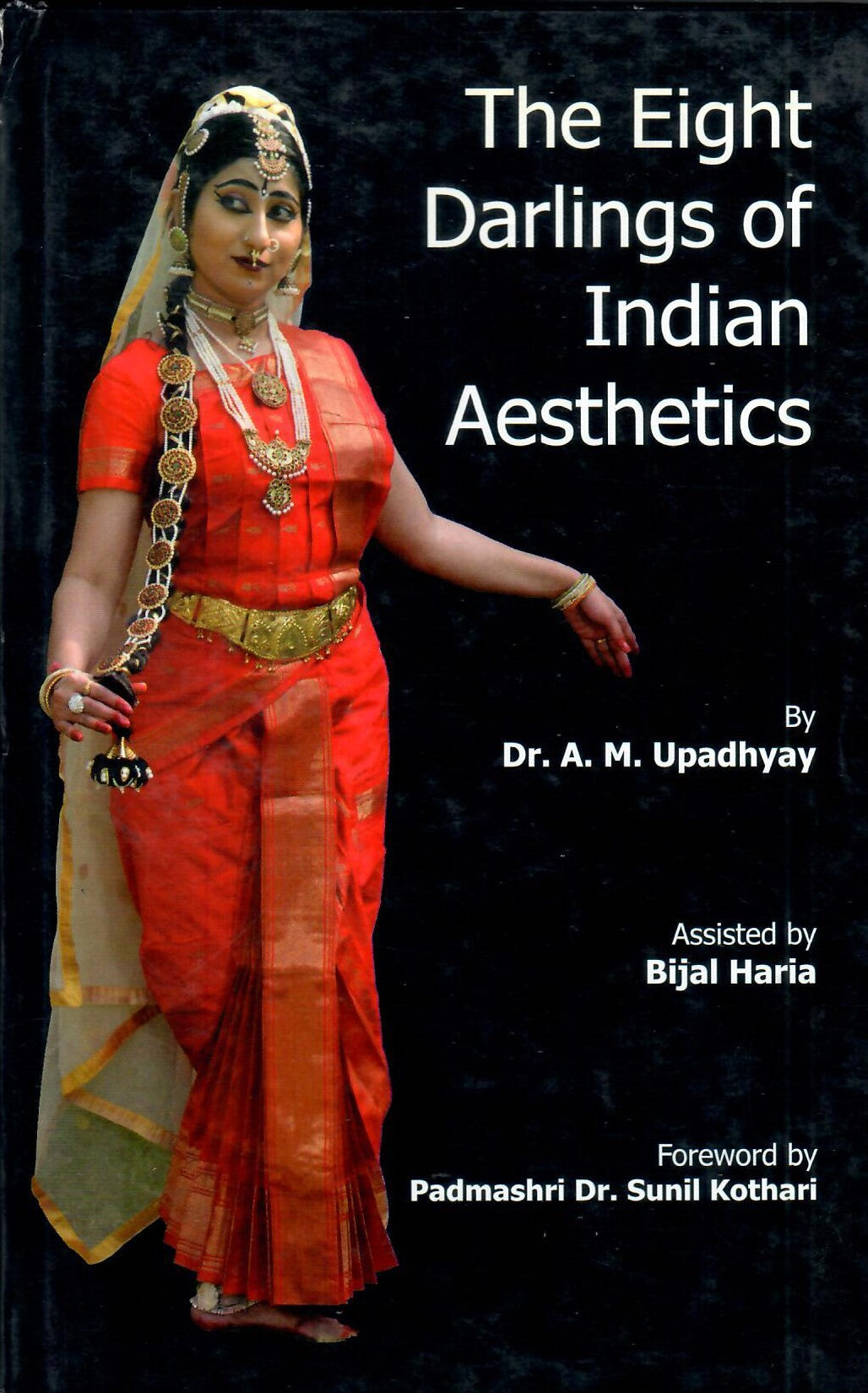
I Have great pleasure in presenting before the discerning lovers of Indian Aesthetics this monograph on "The Eight Darlings of Indian Aesthetics" which represents my short but critical study of the subject of the Astanayikas in Sanskrit Sahityasastra. I am gratefull to Padmashri Dr. Sunil Kothari, who is himself an eminent dance critic, dance historian and an internationally acclaimed author of several pathbreaking books on Dance and Aesthetics, for contributing an illuminating Foreword to this monograph on the Astanayikas, which, I am sure, will serve as an authoritative introduction to this small book which deals with an interesting aspect of the doctrine of Rasa or aesthetic delight. My sincere thanks are due to Dr. V. Raghavan, Dr. S.K. De, Dr. Rakesh Gupta, Dr. Kapila Vatsayana, Dr. V.M.Kulkarni and other well-known scholars whose works have beden utilized by me in preparing this small book. I would like to place on record my deep appreciation of the enthusiasm with which Smt. Bijal Haria has assisted me in the preparation of this monograph as also in taking care of the artistic presentation of this work. But for the her help this work would not have seen the light of the day.
Foreword: Dr. A.M. Upadhayay, former Professor and Head, Department of Sanskrit, Bhavan's College of Arts and Science, Mumbai with his erudition and transparent love for Sanskrit literature, has given another volume on the topic of the Astanayikas. He calls them, as a true rasika,: 'The Eight Darlings of Indian Aesthetics'. With has deep study of several Sanskrit texts including Bharata's Natyasastra, Abhinavagupta's Abhinavabharati, Rudrabhatta's Srngaratilaka, Rudrata's Kavyalankara, Dhananjaya's Dasarupaka with Dhanika's Avaloka tika; Acharaya. Hemachandra's Kavyanusasana, Viswanatha's Sahityadarpana, Bhanudatta's Rasamanjari, Rupa Goswami's aUjjwalanilamani, and Shingabhupala's Rasan\rnavasudhakara, he leads the reader in to myraid facets of the Astanayikas, replete with innumerable quotations of verses from these texts in a succinct and lucid manner.